


 +94 11 754 4801
 info@sliit.lk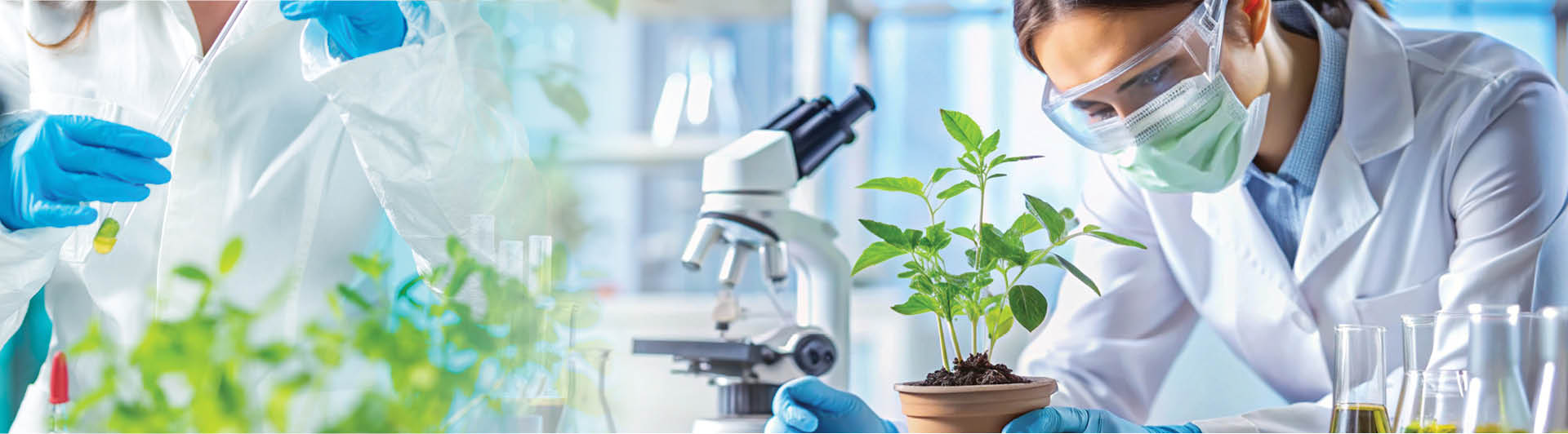
BEd (Hons) in
Biological Sciences
This programme integrates biological sciences with pedagogical training, enabling graduates to teach Biology and Chemistry effectively. The curriculum covers educational psychology, teaching methods, and advanced science topics, fostering both subject mastery and teaching proficiency. Graduates are equipped for careers in education and further academic pursuits.
Awarding University
This recognized academic programme is awarded by SLIIT under the Faculty of Humanities & Sciences.
Ensures globally accepted academic standards, preparing students with practical skills aligned to current industry needs and expectations.

Accreditation

Approved by MOE | UGC
Approved by the Ministry of Education, Sri Lanka, and the University Grants Commission.
Member of ACU
Member of the Association of Commonwealth Universities (ACU)

Member of IAU
Member of the International Association of Universities (IAU)
Why & What..?
The SLIIT’s B.Ed. in Biological Sciences offers a balanced focus on both biology and chemistry, ensuring students gain a strong foundation in the core sciences. The programme includes comprehensive teacher training modules designed to develop effective teaching methodologies and classroom management skills. Students benefit from hands-on teaching practice and internships, providing real-world experience in educational settings. Graduates are well-prepared for teaching roles in both public and private institutions, with a clear pathway to pursue postgraduate studies in education or science.
This programme covers both theoretical and practical aspect into,
-
Educational Foundations and Psychology
-
Teaching Methods for Science Subjects
-
Advanced Biology and Chemistry Modules
-
Laboratory Safety and Management
-
Research Methods and Dissertation
Upon successful completion of the programme at SLIIT, graduate will ,
-
Possess in-depth knowledge of biological sciences.
-
Apply effective teaching strategies in science education.
-
Conduct and supervise laboratory sessions safely.
-
Engage in educational research and curriculum development.
-
Pursue careers in teaching or further academic qualifications.

Programme Structure
-
First Year
Foundations in education and basic sciences
-
Second Year
Intermediate science subjects and teaching methodologies.
-
Third Year
Advanced topics in biology and chemistry, with teaching practice
-
Fourth Year
Research project and specialized education modules.
| Semester 1 | ||
|---|---|---|
| Code | Module | Credit |
| ED1013 | Philosophical Foundation in Education | 3 |
| ED1022 | ICT for Education | 2 |
| SC1083 | Basic Analytical Chemistry | 2 |
| SC1053 | Chemical and Cellular Basis of Life | 3 |
| SC1062 | General Chemistry | 2 |
| SC1071 | General Chemistry Laboratory | 1 |
| EN1073 | Communication Skills | 0 |
| Semester 2 | ||
|---|---|---|
| Code | Module | Credit |
| ED1033 | Psychological Foundation of Education | 3 |
| ED1043 | Teaching Methods – General &Special | 3 |
| ED1052 | Sociological Foundation of Education | 2 |
| SC1094 | Evolution and Diversity of Organisms | 4 |
| SC1102 | Inorganic Chemistry I | 2 |
| SC1111 | Inorganic/Analytical Chemistry Laboratory I | 1 |
| SC1121 | Laboratory Safety and Management | 1 |
| Semester 1 | ||
|---|---|---|
| Code | Module | Credit |
| SC2035 | Plant Form and Function | 0 |
| SC2042 | Organic Chemistry I | 0 |
| SC2051 | Organic Chemistry Laboratory -I | 0 |
| SC2061 | Organic Synthesis | 0 |
| SC2072 | Industrial Chemistry | 0 |
| ED2013 | Comparative Education | 0 |
| ED2022 | Guidance and Counselling | 0 |
| ED2033 | Measurement and Evaluation in Education | 0 |
| Semester 2 | ||
|---|---|---|
| Code | Module | Credit |
| ED2042 | Value Education | 2 |
| ED2052 | Management of Learning | 2 |
| ED2062 | Aesthetic Education | 2 |
| SC2141 | Environmental Chemistry | 0 |
| SC2106 | Animal Form and Function | 6 |
| SC2112 | Physical Chemistry I | 2 |
| SC2121 | Physical Chemistry Laboratory I | 1 |
| SC2131 | Biochemistry | 1 |
| Semester 1 | ||
|---|---|---|
| Code | Module | Credit |
| ED3012 | Soft Skills for Teachers | 2 |
| ED3022 | Child Rights | 2 |
| SC3073 | Environmental Biology | 3 |
| SC3083 | Microbiology | 3 |
| SC3092 | Inorganic Chemistry II | 2 |
| SC3101 | Inorganic/ Analytical Chemistry Laboratory II | 1 |
| SC3111 | Natural products | 1 |
| Semester 2 | ||
|---|---|---|
| Code | Module | Credit |
| SC3122 | Principles of Genetics | 2 |
| SC3132 | Molecular Biology - Basic Techniques and Applications | 2 |
| SC3144 | Applied Biology | 4 |
| SC3152 | Solid State and Organometallic Chemistry | 2 |
| SC3172 | Fundamentals of Spectroscopy | 2 |
| SC3181 | Nanotechnology | 1 |
| ED3033 | Research Methods | 0 |
| Semester 1 | ||
|---|---|---|
| Code | Module | Credit |
| ED4023 | Portfolio Assessment | 0 |
| ED4036 | Practicum | 0 |
| Semester 2 | ||
|---|---|---|
| Code | Module | Credit |
| ED4046 | Dissertation | 6 |
| SC4021 | Food Technology | 0 |
| SC4031 | Immunology | 0 |
| SC4042 | Advanced Biology | 0 |
| SC4052 | Physical Chemistry - II | 0 |
| SC4061 | Physical Chemistry Laboratory - II | 0 |
| SC4071 | Nuclear Chemistry | 0 |
| ED4013 | Surface Science and Catalysis | 0 |
| ED4013 | Curriculum Theory and Practice | 0 |
More about the program
Local A/Ls: Minimum of 3 “S” passes including Biology & Chemistry in one and the same sitting.
Cambridge/Edexcel A/Ls: Minimum of 3 “D” passes including Biology & Chemistry in one and the same sitting.
- Applicants should also pass the Aptitude Test conducted by SLIIT.
-
The fee for this degree is LKR 240,000 per semester. Fees for each semester must be paid before commencement of the semester.
The course fee is all-inclusive, covering lectures, tutorials, examinations, and access to library and computer laboratory facilities.
Course fees are subject to change.
Fees can be paid to the bank accounts of SLIIT at any branch. For further details on payment options and bank information, please visit:
https://www.sliit.lk/study/fees-and-scholarships/fees-and-costs?#payment-to-sliit
The BEd. in Biological Sciences at SLIIT is a four-year full-time degree programme conducted in English. It is approved by the Ministry of Education, Sri Lanka, and recognized by the University Grants Commission (UGC). The curriculum includes compulsory teaching practice, allowing students to gain practical experience in educational settings. In the final year, students are required to complete a research dissertation, fostering academic inquiry and critical thinking. The programme comprises a minimum of 120 credits and is aligned with SLQF Level 6 standards.
FAQs
Yes, it is approved by the Ministry of Education and recognized by the UGC.
Graduates can become secondary school teachers, curriculum developers, or pursue postgraduate studies in education or science.
Yes, students engage in extensive laboratory work and research projects.