 +94 11 754 4801
 info@sliit.lk
Hosted By: School of Business and AI
Event cost: Free
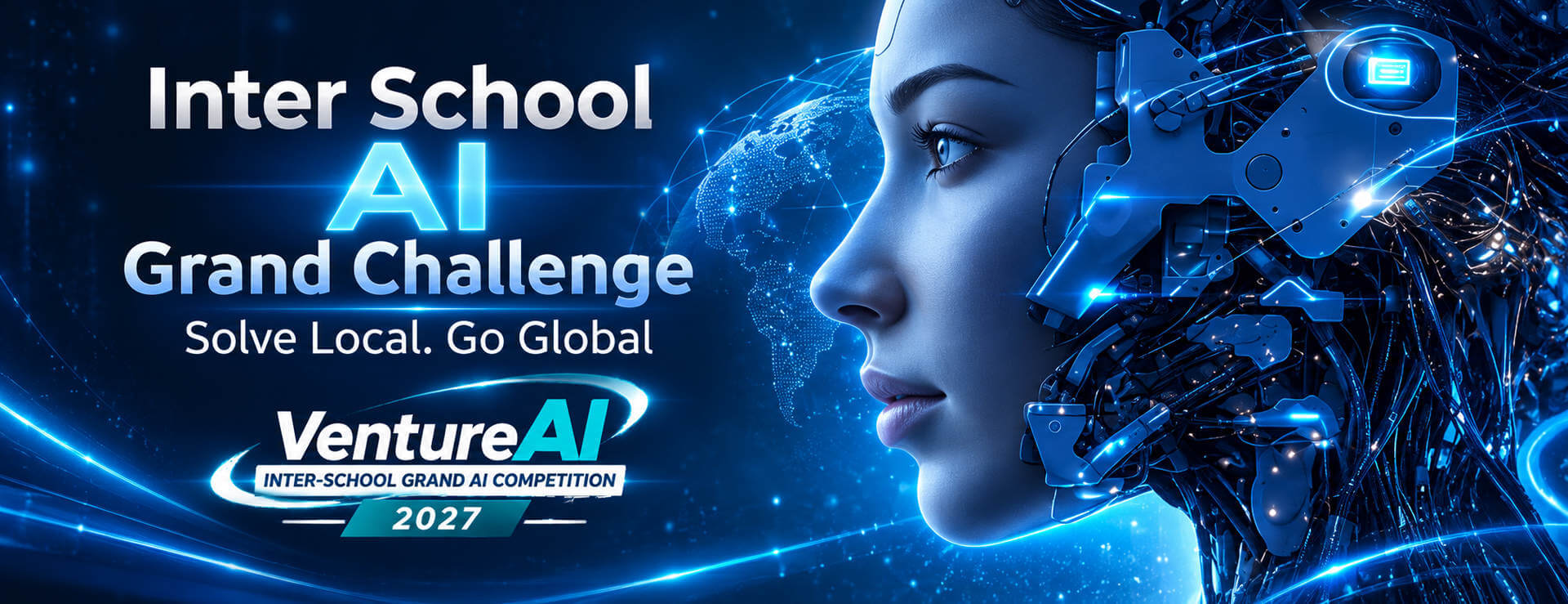
Inter-School AI Grand Challenge
Open to students in grade 10 and above, this competition invites young innovators to tackle some of Sri Lanka's most pressing challenges using real-world data. Participants will explore areas such as agriculture, road safety, preventive health, human-elephant coexistence, sustainability, and local-language AI.
Throughout the journey, SLIIT will support students with expert mentoring, computing infrastructure, and guidance on AI and data literacy, helping them turn local insights into solutions with global potential.
අලුත් අලුත් දෑ නොතනන ජාතිය ලොව නොනගී
புதுமைகளை உருவாக்காத ஒரு தேசம் உலகில் உயர்ச்சி பெறாது.
A nation that does not innovate cannot rise.
-
04
March
-
9:00 AM
-
Grand Finale at SLIIT Malabe
00 Days
00 Hours
00 Minutes
00 Seconds
- Competition Launch: 01st of December 2026
- Registration close on: 04th of December 2026
- Project Proposal and Video: 14th of December 2026
- Deadline for Project Development Stage 01: 07 January 2027
- Deadline for Project Development Stage 02: 03 February 2027
- Final Competition & Awards Ceremony: 04th of March 2027
Virtual mentoring and screening sessions; final in-person presentation at SLIIT Malabe
- Registration
- Each team must register through the designated online portal on or before 4th December 2026, along with a duly signed consent letter (Annexure 01) from the School Principal.
- Initial Submission
- Each team must submit a duly completed Project Proposal using the provided template, along with a video presentation, on or before 14th December 2026.
- The video presentation must not exceed three minutes and must be prepared and presented by the team members themselves, without using generative AI tools to create the video, visuals, or narration.
- For the presentation, you are allowed to use Sinhala, English, or Tamil.
- Based on the evaluation of the submitted Project Proposals and video presentations, the top 15 teams will be selected to advance to the next round.
- Submission Deadline
- All required documents and videos must be submitted before the specified deadline. Late submissions will not be accepted.
- Shortlisting and Mentorship
- Shortlisted teams will proceed to the next stage of the competition and receive guidance from an assigned industry expert and a SLIIT academic mentor to further develop and refine their proposed solutions.
- Project Development Sessions
- Participation in the scheduled project development and mentoring sessions is compulsory for shortlisted teams. These sessions will be conducted by industry experts and SLIIT academics, either online or in person, as communicated by the organizing committee.
- Grand Finale Presentation
- Finalists must present their proposed solutions to the judging panel using any language during the Grand Finale. Each team will be allocated a maximum of 20 minutes, comprising:
· 20 minutes for the team presentation and demonstration.
· 10 minutes for questions and answers with the judging panel.
Through the registration link: https://forms.cloud.microsoft/r/Dgqb4xMiRr
1. Agriculture (Smart Farming)
How can artificial intelligence help farmers grow better crops and reduce losses?
- Crop Health – Keeping crops healthy and identifying plant diseases.
- Weather and Farming – Helping farmers decide when to plant, water, and harvest crops.
- Market and Prices – Helping farmers sell their products at fair prices.
- Reducing Food Waste – Preventing fruits, vegetables, and other crops from being wasted after harvesting.
2. Road Safety
How can technology make our roads safer for everyone?
- Preventing Accidents – Identifying dangerous roads and helping prevent accidents.
- Safe Driving and Riding – Encouraging drivers and riders to follow road safety rules.
- School and Pedestrian Safety – Making roads safer for schoolchildren and people walking.
- Road Safety Awareness – Teaching people about traffic rules and safe road habits.
3. Preventive Health (Healthy Living)
How can technology help people stay healthy and prevent illnesses?
- Early Health Warnings – Identifying possible health problems before they become serious.
- Healthy Food and Habits – Encouraging healthy eating, exercise, and good daily habits.
- Health Education – Helping people learn about health, hygiene, and disease prevention.
- Health Reminders – Reminding people about medical checkups, vaccinations, and healthy routines.
4. Human-Elephant Coexistence
How can artificial intelligence help people and elephants live safely together?
- Elephant Detection and Warnings – Alerting villages when elephants are nearby.
- Elephant Movement Tracking – Understanding where and when elephants move.
- Protecting Farms and Homes – Finding safe ways to protect crops, houses, and property.
- Community Alerts – Helping villagers share information about elephant sightings and possible dangers.
5. Sustainability (Protecting Our Environment)
How can technology help us protect nature and use resources wisely?
- Waste Management and Recycling – Reducing waste, sorting garbage, and encouraging recycling.
- Saving Energy and Water – Finding smart ways to reduce electricity and water usage.
- Protecting Nature and Wildlife – Protecting forests, animals, plants, and the environment.
- Eco-Friendly Habits – Encouraging people to make environmentally friendly choices in everyday life.
6. Local Language AI (Technology for Everyone)
How can artificial intelligence help people communicate, learn, and access information in their own languages?
- Easy Access to Services – Helping people use technology and access information in Sinhala, Tamil, and other languages.
- Voice and Speech Assistance – Creating tools that understand and respond to spoken languages.
- Smart Learning Support – Helping students learn school subjects using their preferred language.
- Protecting Local Languages – Using technology to preserve local languages, stories, and traditions.
- Technology for Everyone – Making technology easier to use for people with different abilities and backgrounds, such as sign language translation for the hearing-impaired, voice assistants for the visually impaired, etc.
7. Disaster Management (Staying Safe During Disasters)
How can artificial intelligence help people prepare for, stay safe during, and recover from natural disasters?
- Early Disaster Warnings – Warning people about floods, landslides, storms, and other natural disasters.
- Disaster Preparedness – Helping families, schools, and communities prepare for emergencies.
- Rescue and Emergency Support – Helping people find safe places, request assistance, and contact rescue teams.
- Disaster Mapping – Identifying areas that are at risk of floods, landslides, and other dangers.
- Recovery and Community Support – Helping affected communities find essential supplies, report damage, and recover after disasters.
Team Formation and Registration
- Eligibility:
- Participants must be enrolled in Grade 10 or above at a Sri Lankan school during the 2026 academic year.
- The solution submitted must not have won an award in a previous SLIIT competition.
- Team Composition
- Each team may consist of a maximum of four students from the same school.
- Students from different grades may form a team, and each student is permitted to participate in only one team.
- Each school may register a maximum of three teams.
- Teacher-Mentor
- Each team must nominate one teacher from their school to serve as the team mentor, official contact person, and accompanying teacher during on-campus activities. One teacher can mentor multiple teams from the same school.
- Teacher Guidance
- School staff may provide guidance and support in concept development and planning. However, only student team members are permitted to present their proposed solutions during the competition.
- Principal’s Permission Letter
- During registration, students must upload a permission letter signed by the School Principal, confirming approval for participation in the competition and granting permission for photography and videography during competition-related activities. (Annexure 01)
Proposed Solution
- Problem Identification
- Each team must identify and address a real-world problem relevant to Sri Lanka. The problem may fall within any of the suggested themes.
- Solution Development
- A fully functional product is not mandatory. Teams may present their proposed solutions through a concept, a mock-up, a prototype, or a demonstration.
- Supporting Evidence and Data
- Teams should provide relevant evidence, such as observations, surveys, research findings, or publicly available data, to demonstrate the existence and significance of the identified problem. Where applicable, teams should explain how data will be collected and used in their proposed solution.
Originality and Use of AI Tools
The following will be checked during the evaluations,
- Originality
- All submitted ideas and work must be original and developed by the participating team. Plagiarism or the submission of copied work may result in disqualification.
- Use of AI Tools
- Teams are permitted to use AI-powered tools to develop the solution, including chatbots, code assistants, and other generative AI applications, to support their work.
- AI Tool Declaration
- Teams must clearly declare any AI tools used and explain them within their submission/ Presentation.
- Acknowledgment of Sources
- All external sources, datasets, references, and tools used in developing the proposed solution must be appropriately acknowledged.
- Presentation Responsibilities
- Teachers and school staff may provide guidance during concept development and preparation. However, only student team members are permitted to deliver presentations and respond to questions from the judges.
- Active Participation
- All team members must actively contribute to the final presentation through speaking, demonstrating the proposed solution, or responding to the judging panel's questions.
-
For all inquiries contact: Ms. Buddhima Attanayake - buddhima.a@sliit.lk
Outstanding teams may receive mentoring from industry and academic experts, and incubation support to develop promising solutions.
The emphasis is on supporting ideas beyond the competition.
- Main Awards
· Winner (Champion Team)
· 1st Runner-up
· 2nd Runner-up
- Special Awards
- Innovation Excellence - Awarded to the team presenting the most creative and original AI-based solution.
- Real-World Impact Excellence - Awarded to the team proposing a solution with the greatest potential to address a real-world problem.
- AI Excellence - Awarded to the team demonstrating the most effective and meaningful application of AI technologies.
- Design Excellence - Awarded to the team whose solution offers the most user-friendly, accessible, and well-designed experience.
Inquiry About The Event
For further details or assistance regarding this event, please contact us. We are happy to provide any additional information or support you may require.
Image Gallery
Other Main Events at SLIIT


SLIIT's Got Talent

SLIIT Robofest
CODEFEST